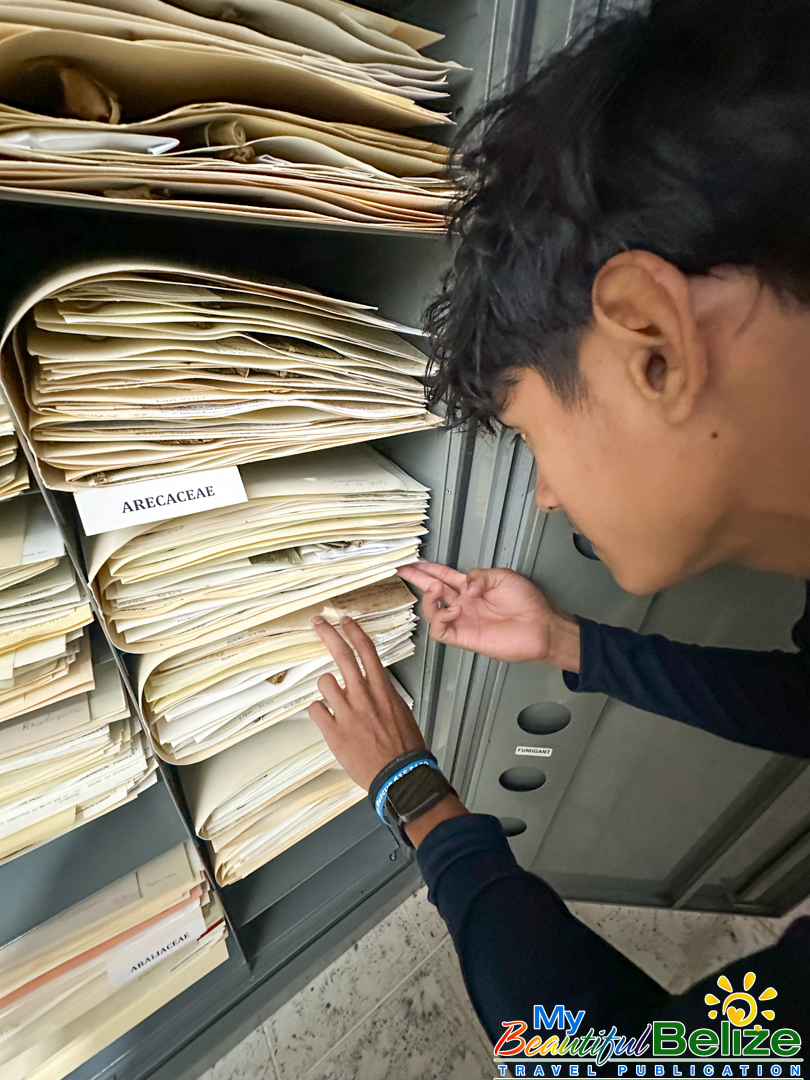
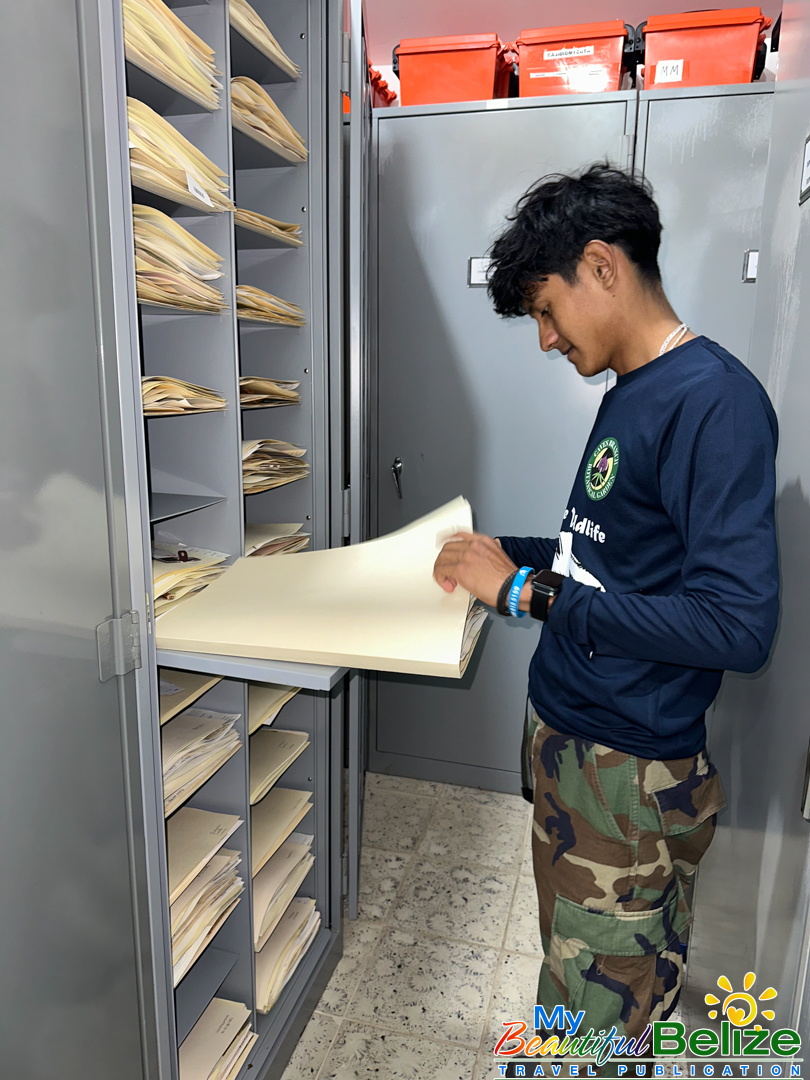

Deep within the archives of the Belize Forestry Department (BFD), thousands of carefully preserved plant specimens quietly tell the story of Belize’s extraordinary natural heritage. The facility houses the country’s herbarium, a scientific collection of dried plant specimens that serves as an important resource for research, conservation, and education.
A herbarium is essentially a library of plants. Specimens collected from forests, rivers, and mountains across Belize are dried, mounted, labeled, and preserved under carefully controlled environmental conditions. By regulating temperature and humidity, scientists and technicians can ensure these specimens remain intact for decades, or even centuries, allowing future generations to study Belize’s botanical diversity.

At the BFD, staff members and volunteers are currently working to preserve and modernize this valuable collection. According to John Gregorio, a staff member at the Caves Branch Botanical Garden who has been assigned to the herbarium for more than a year, the collection contains thousands of plant specimens from across the country.
“In the boxes we have approximately 9,000 specimens, and in the cabinets we have roughly 12,000,” Gregorio explained. The collection has endured a difficult history. During its time in Belize City, the collection suffered significant setbacks when a fire damaged some specimens. Despite those losses, much of the collection survived and continues to be preserved today.
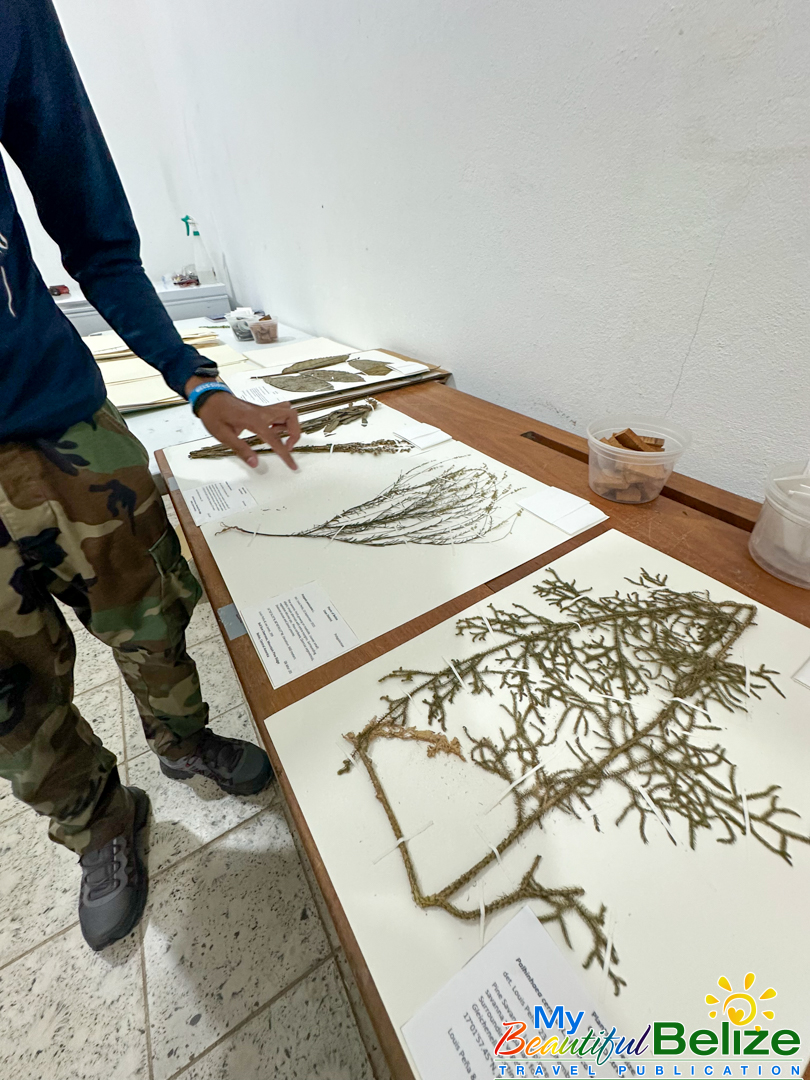
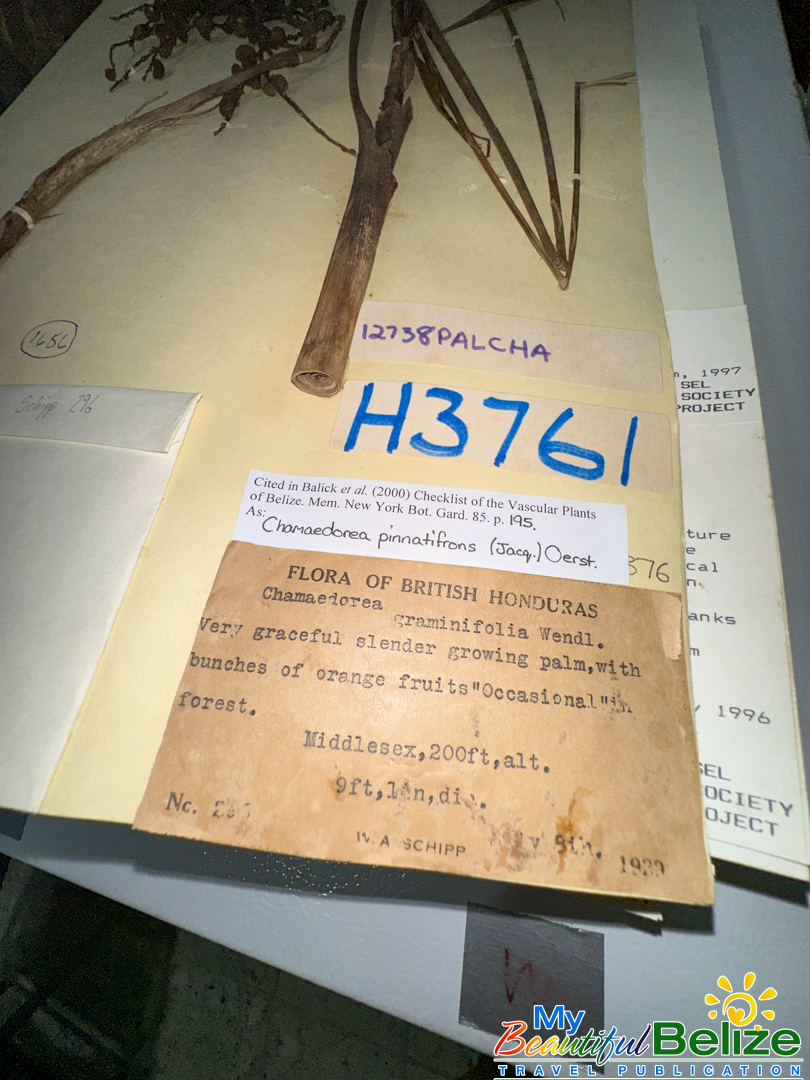

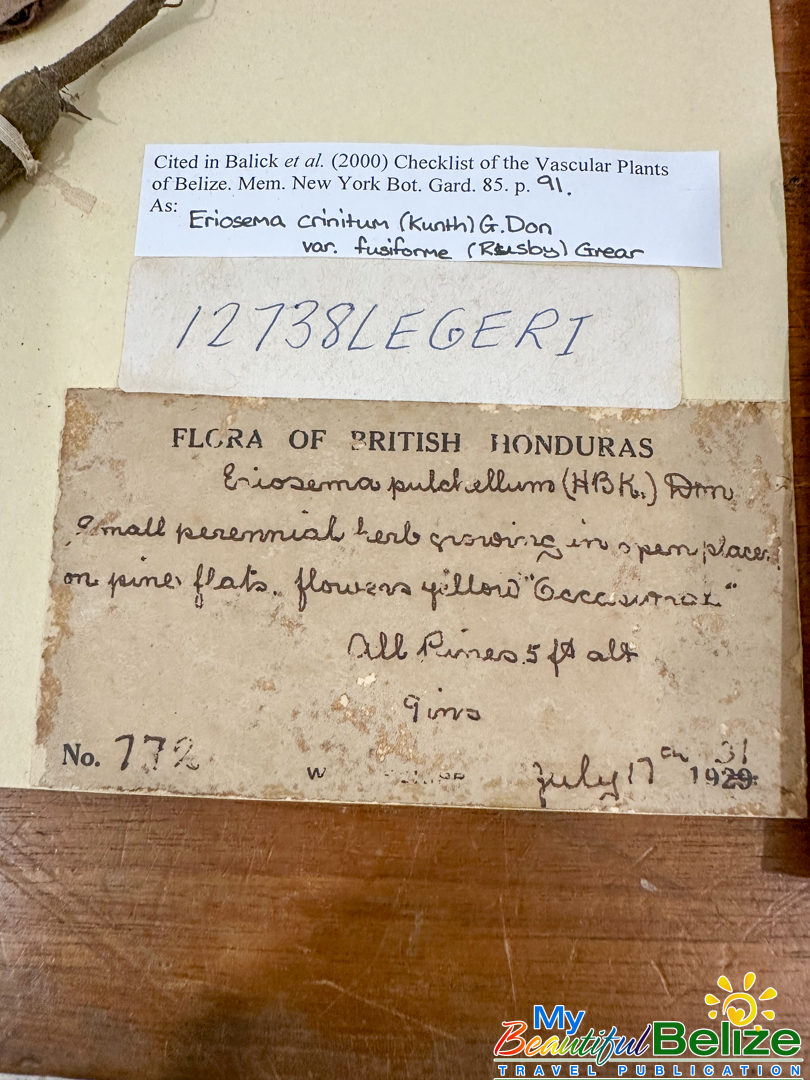
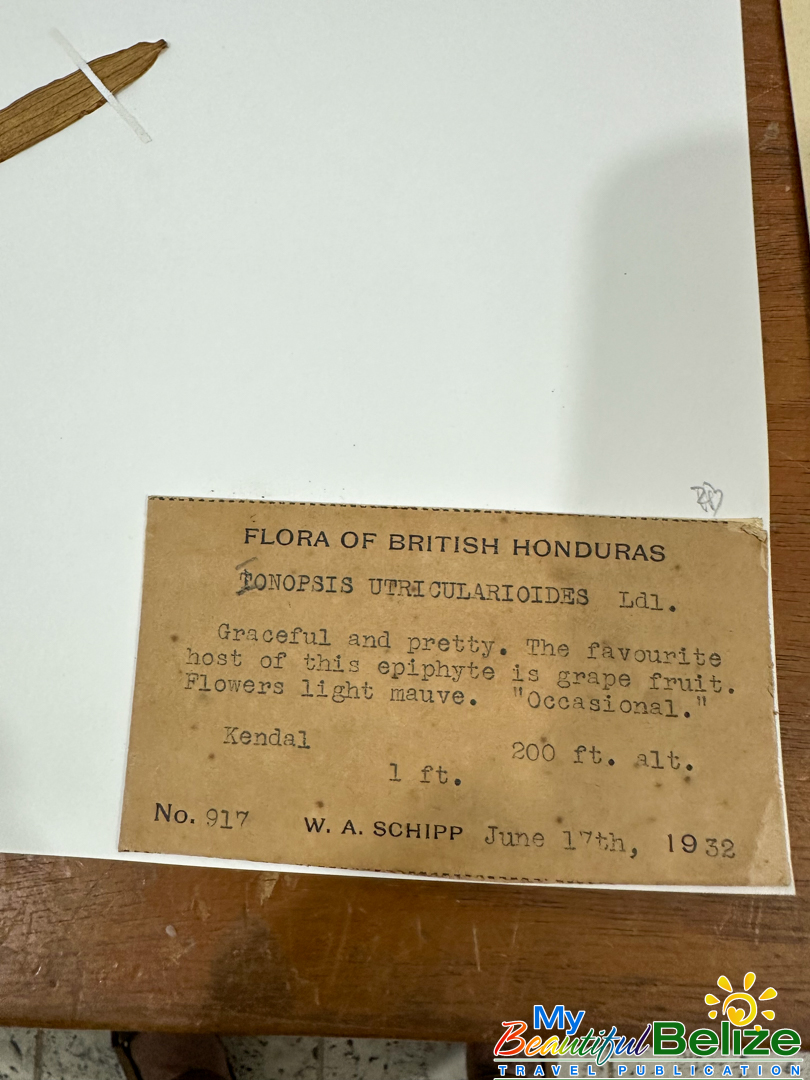

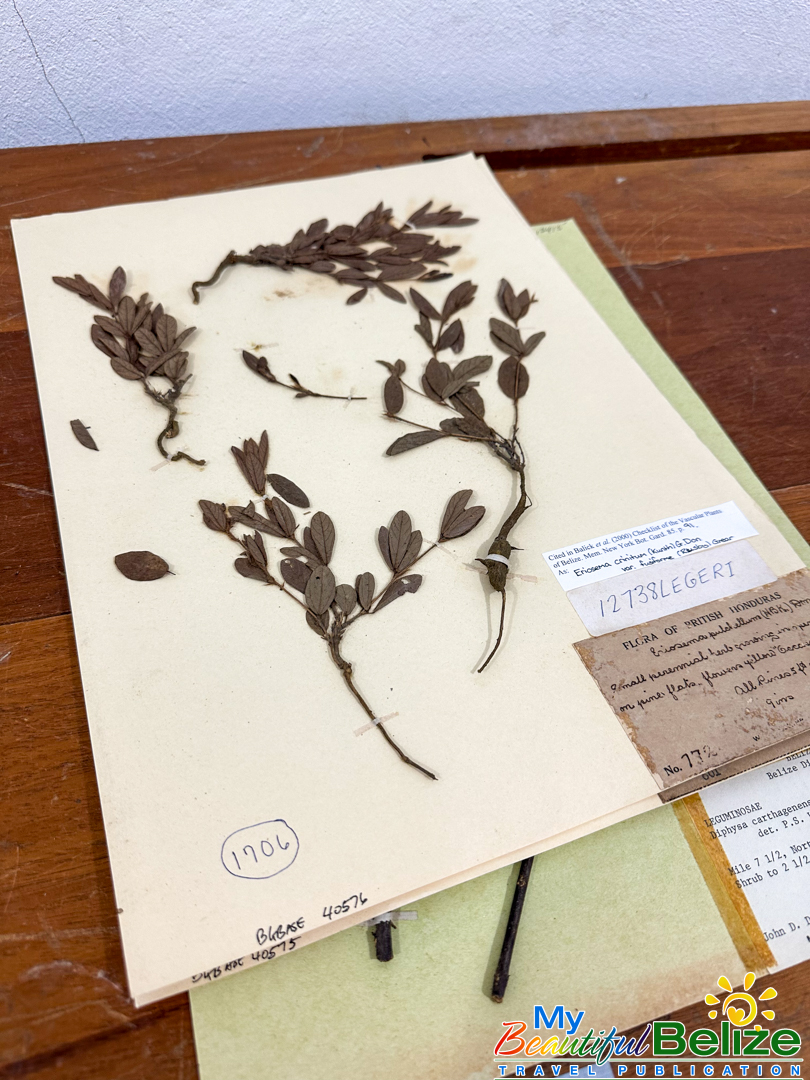
The herbarium is more than a storage facility; it is a scientific archive that provides insight into how plants evolve and adapt over time. Researchers can compare specimens collected decades ago with modern samples to study how factors such as climate change, deforestation, and environmental pressures may be influencing plant morphology.
Scientists studying a particular species can examine historical samples to understand differences in leaf structure, rooting patterns, and other botanical characteristics. These comparisons can reveal important clues about how ecosystems are changing and how Belize’s flora is responding.
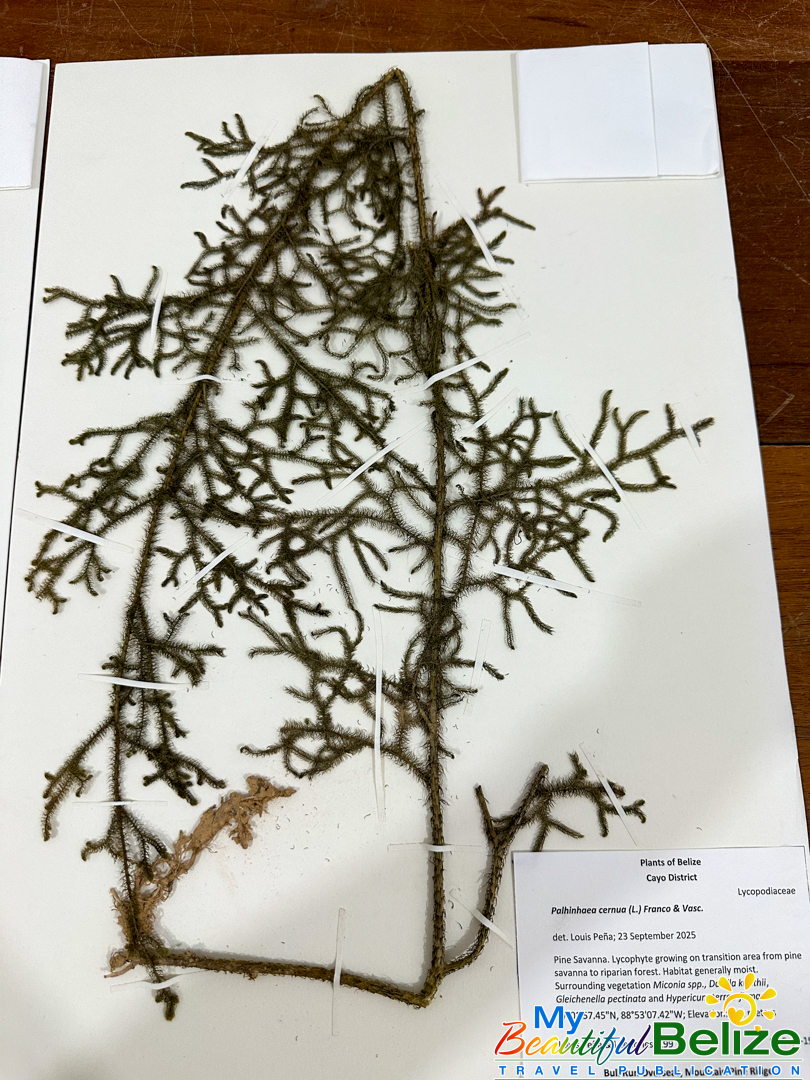


“Belize has a big diversity of plants,” Gregorio said. “Scientists from other countries may want to study species found here. By comparing older samples with newer ones, they can learn how plants have adapted to changes in the environment”.
Preserving this knowledge is particularly important in a country as biologically rich as Belize. Tropical ecosystems host thousands of plant species, many of which remain under-documented or newly discovered. Herbarium collections play a key role in documenting these species and supporting conservation efforts.
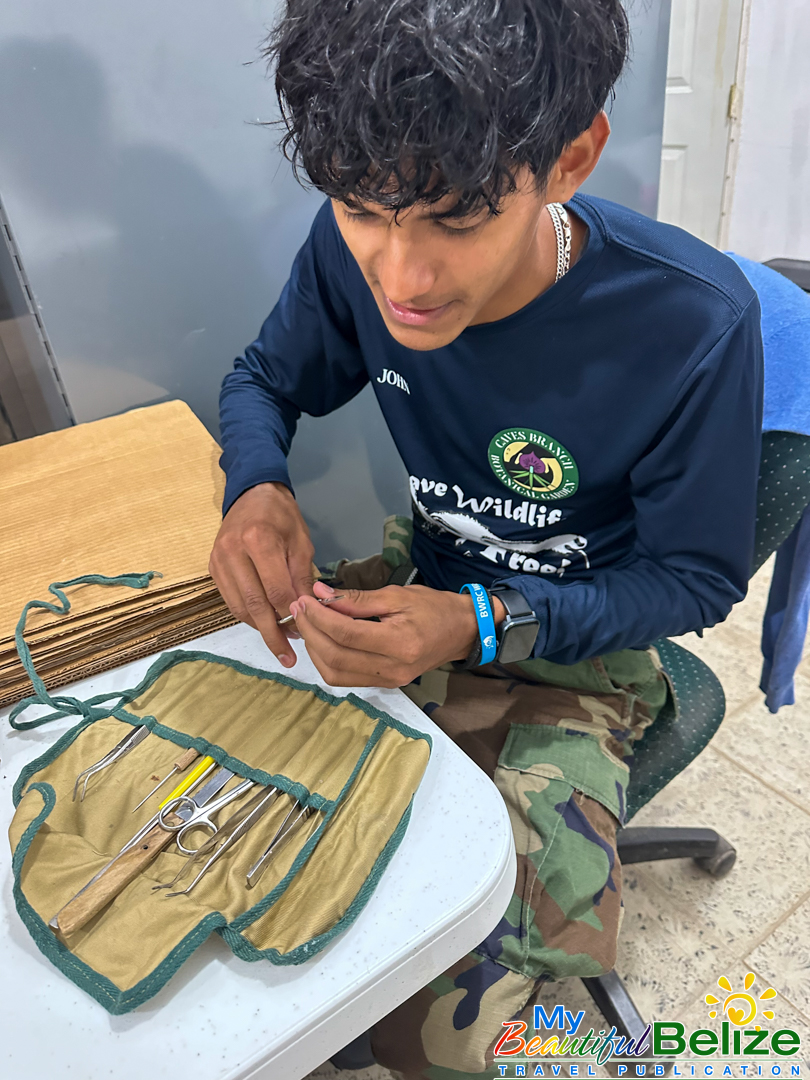
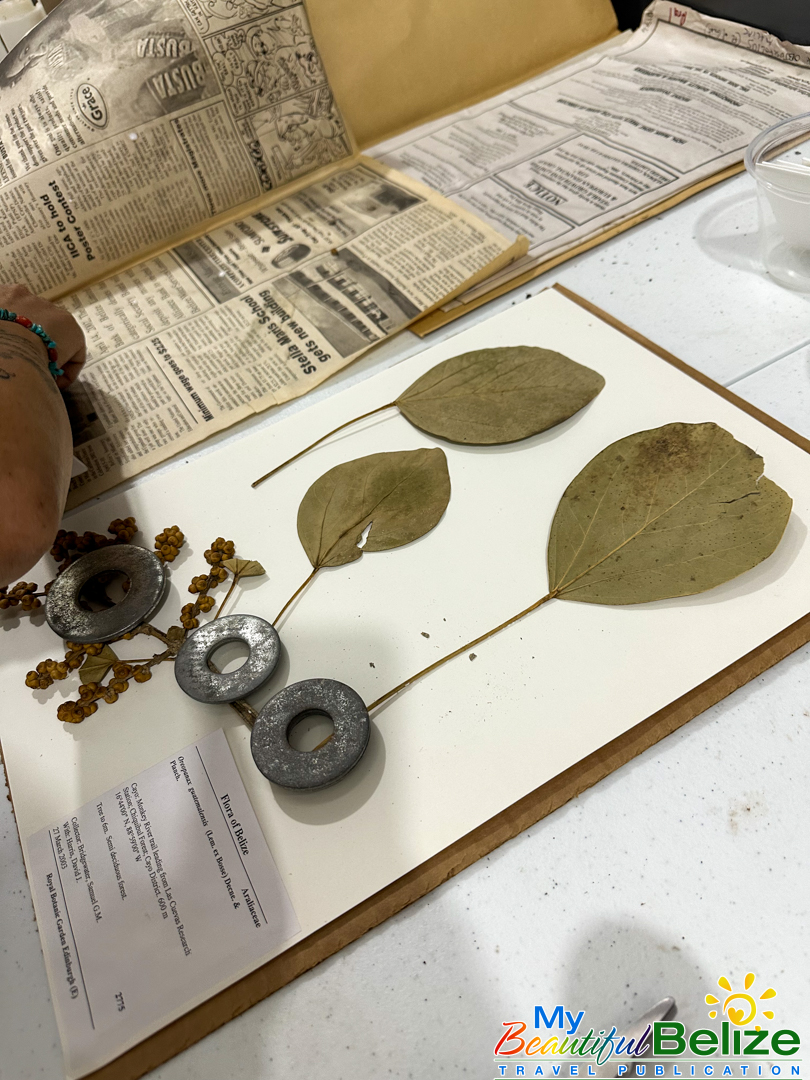
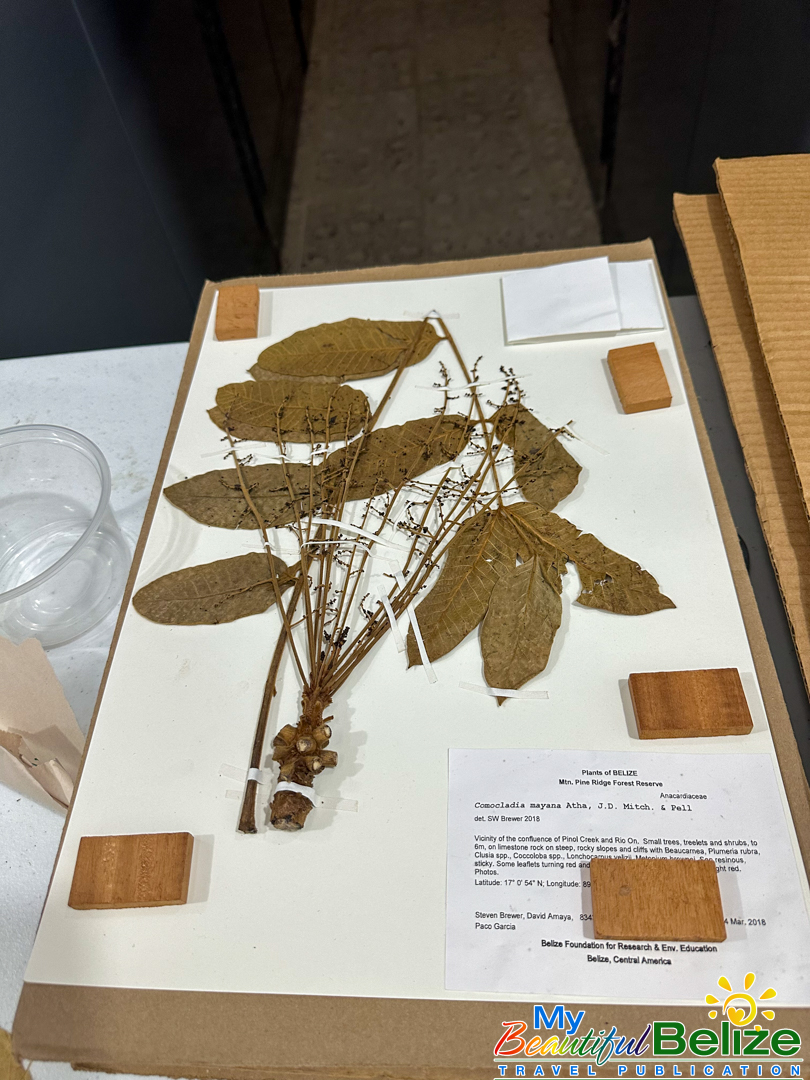
Current work at the herbarium focuses on preserving older specimens and improving the organization of the collection. Many samples previously stored in boxes are now being mounted on archival sheets and cataloged. Each specimen must be carefully arranged on a page, secured with glue or thread depending on the plant’s structure, and labeled with detailed information about where and when it was collected.
The process is meticulous and time-consuming. Preparing a single specimen page can take approximately half an hour or more, depending on the plant’s complexity and the curator’s experience.
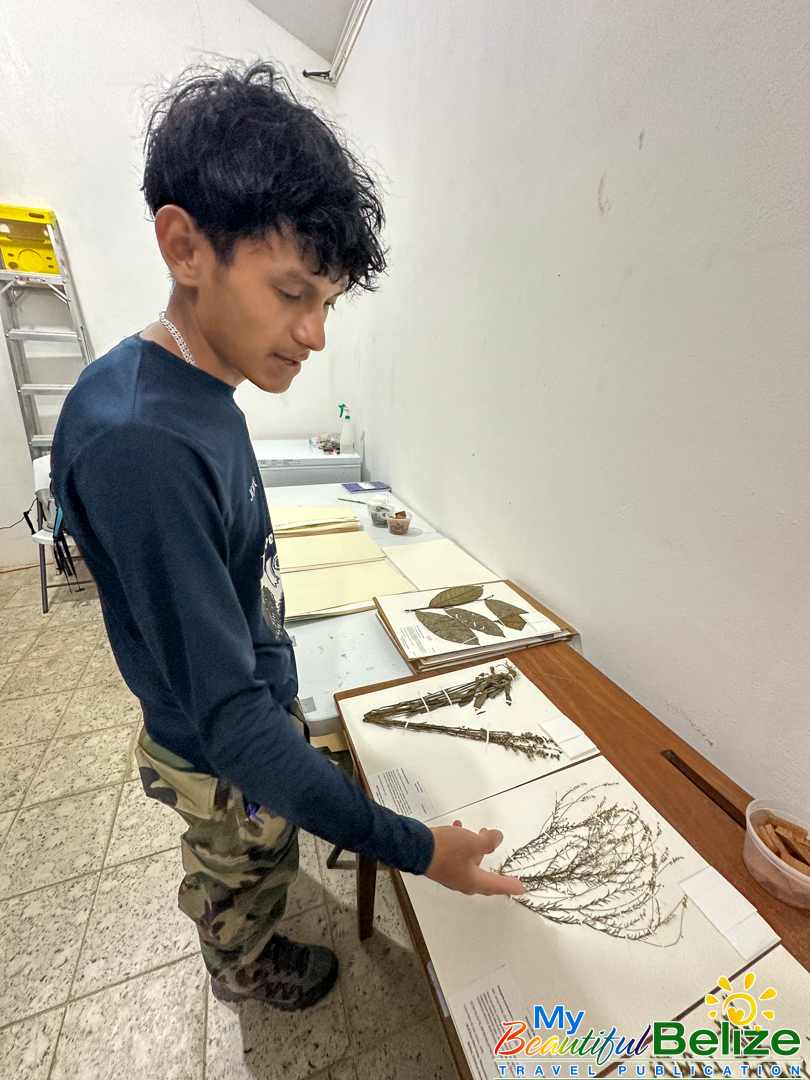
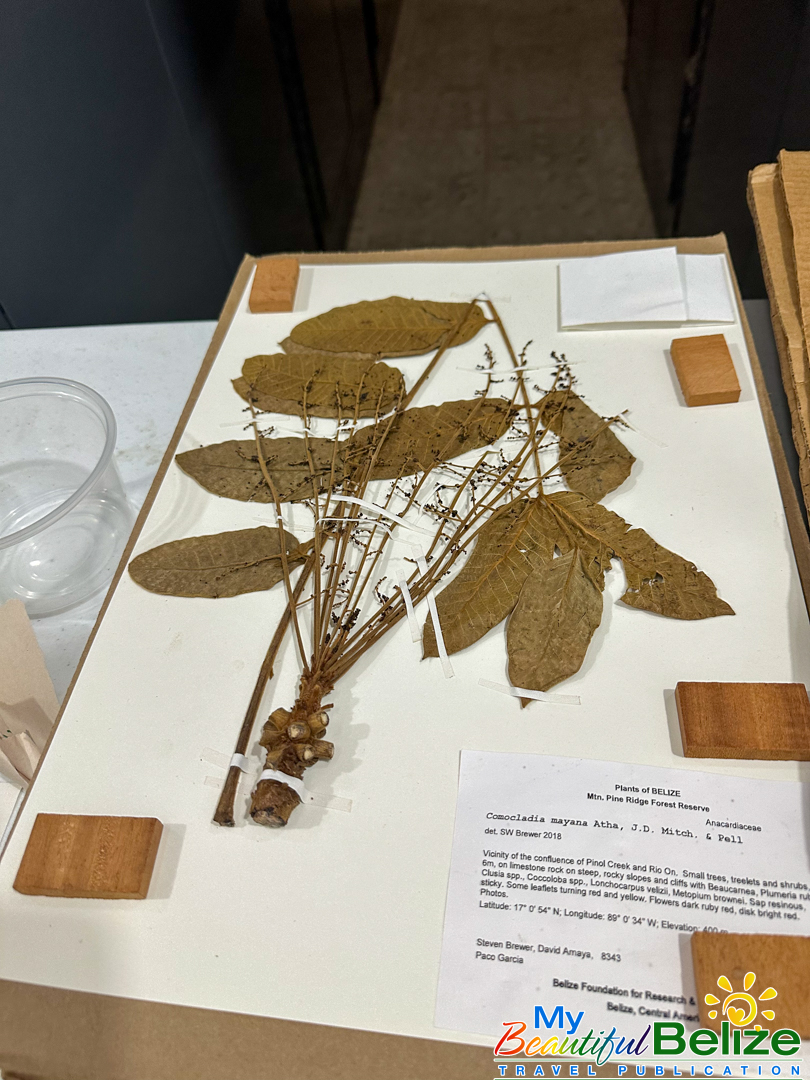
Once mounted, the specimens are filed and added to a digital database. The team is also planning to photograph specimens and associated data so they can be accessed online by researchers worldwide. Digitization will make Belize’s botanical records far more accessible to the global scientific community. Even researchers who cannot travel to Belize will be able to study high-resolution images and data from the herbarium.
Fieldwork remains an essential part of maintaining the collection. Botanists and collaborators regularly venture into Belize’s forests to collect new specimens, ensuring the herbarium continues to grow. One of the herbarium’s collaborators, Luis Peña, is currently active in the field collecting plants. Staff members at the botanical garden also participate in collecting and documenting new species.


Fieldwork can be both rewarding and challenging. Botanists often travel to remote areas where communication is limited, and conditions can be physically demanding. Long hikes, unpredictable weather, and difficult terrain are common obstacles. Despite the challenges, discoveries in the field make the effort worthwhile. Gregorio recalls a recent expedition to Elijio Panti National Park, where he encountered a rare plant species near a waterfall.
“There was a tree leaning over the waterfall, and the plant was growing down below,” he said. “It was Tillandsia Filifolia, a bromeliad. That was a really exciting find.” Moments like that highlight the thrill of botanical exploration in a country as ecologically diverse as Belize.
In addition to staff members, volunteers, including students and retirees, play a valuable role in the herbarium’s work. Volunteers assist with mounting specimens, organizing collections, and supporting ongoing preservation efforts.
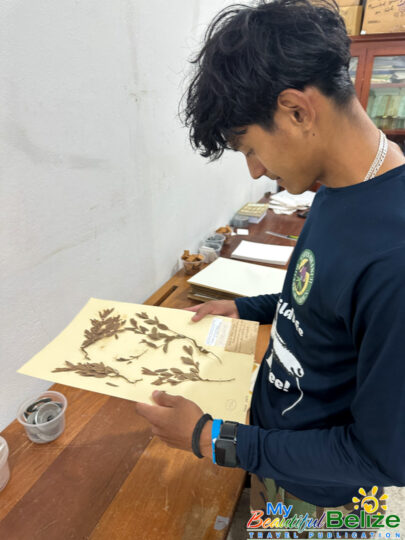 For Gregorio, the experience has been both educational and rewarding. Rather than studying botany through textbooks alone, he has learned through hands-on work at the botanical garden alongside colleagues and mentors. “It’s a great way to learn,” he said. “Being able to work directly with the plants makes it much more meaningful.”
As Belize continues to promote conservation and environmental awareness, the herbarium stands as an important scientific resource. Preserving specimens collected over decades helps researchers understand how ecosystems have changed and how they may continue to evolve.
Through ongoing preservation, digitization, and field collection efforts, the National Herbarium of Belize ensures that the story of Belize’s remarkable plant life will remain available for scientists, students, and conservationists for generations to come.